Leather Cutting Tools: The Complete Guide for Clean, Accurate Leather Crafting
Whether you’re a professional leather manufacturer or a hobbyist, using the right leather cutting tools is the foundation of every high quality leather product. From wallets and belts to jackets, gloves, bags, and shoes, precise cutting ensures clean edges, reduces material waste, and improves the final appearance.
In this guide, we’ll cover the most common leather cutting tools, their uses, and how to choose the right tool for your leatherworking projects.
Why Quality Leather Cutting Tools Matter
Leather is a durable and expensive material. Poor cutting tools can create rough edges, uneven shapes, and unnecessary waste. High quality tools provide:
- Clean and smooth cuts
- Greater accuracy
- Faster production
- Less material waste
- Better finishing results
- Improved product consistency
Whether you work with full grain leather, top grain leather, suede, or vegetable tanned leather, selecting the proper cutting tool makes every project easier.
Essential Leather Cutting Tools
1. Utility Knife
A utility knife is one of the most versatile leather cutting tools. It works well for straight cuts and trimming patterns.
Best For:
- Straight leather cuts
- Pattern trimming
- Thin and medium weight leather
2. Rotary Cutter
Rotary cutters feature a circular blade that glides smoothly across leather.
Advantages:
- Fast cutting
- Excellent for long straight lines
- Ideal for soft leather and garment leather
Rotary cutters are widely used in leather apparel manufacturing.
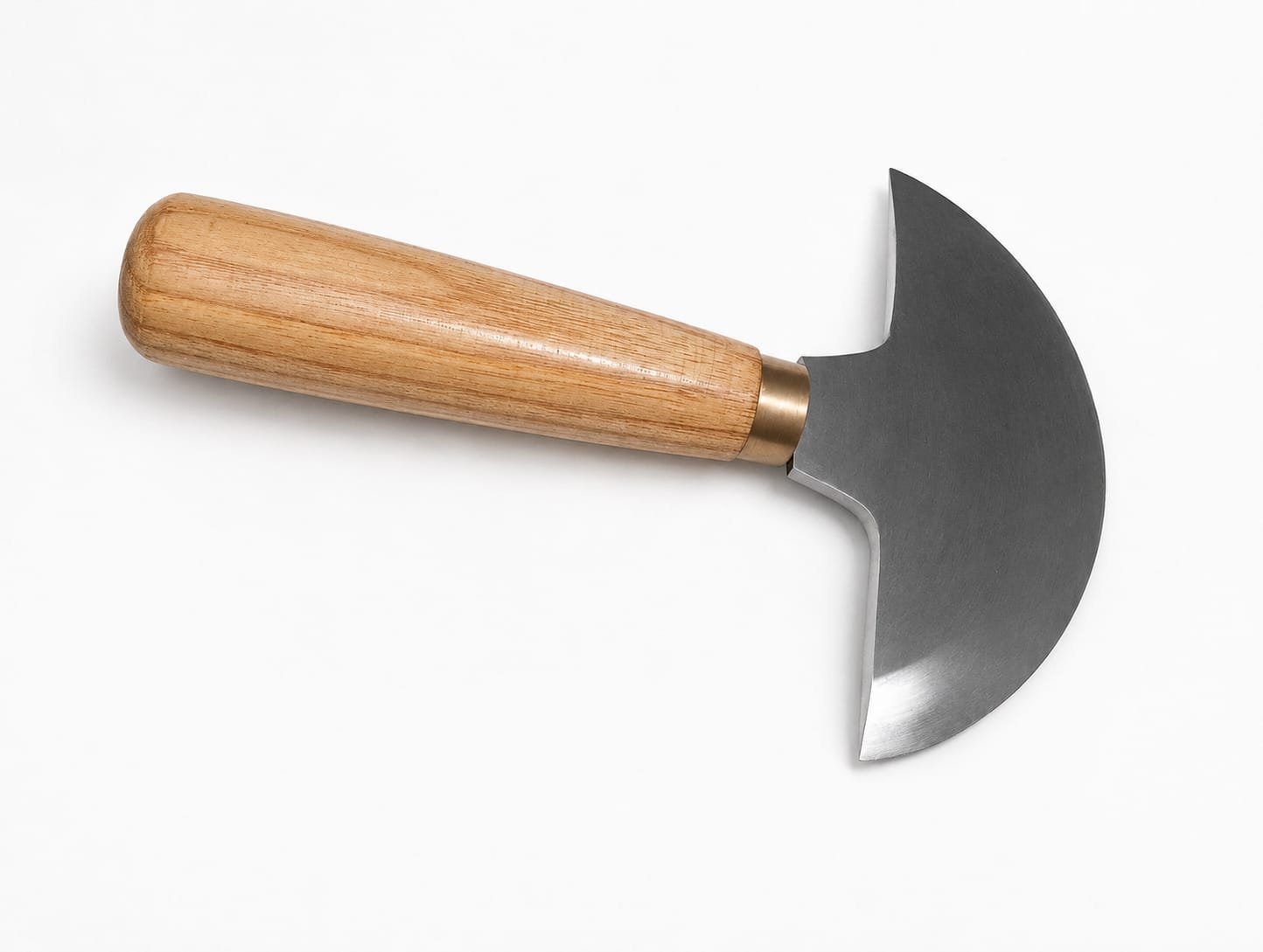
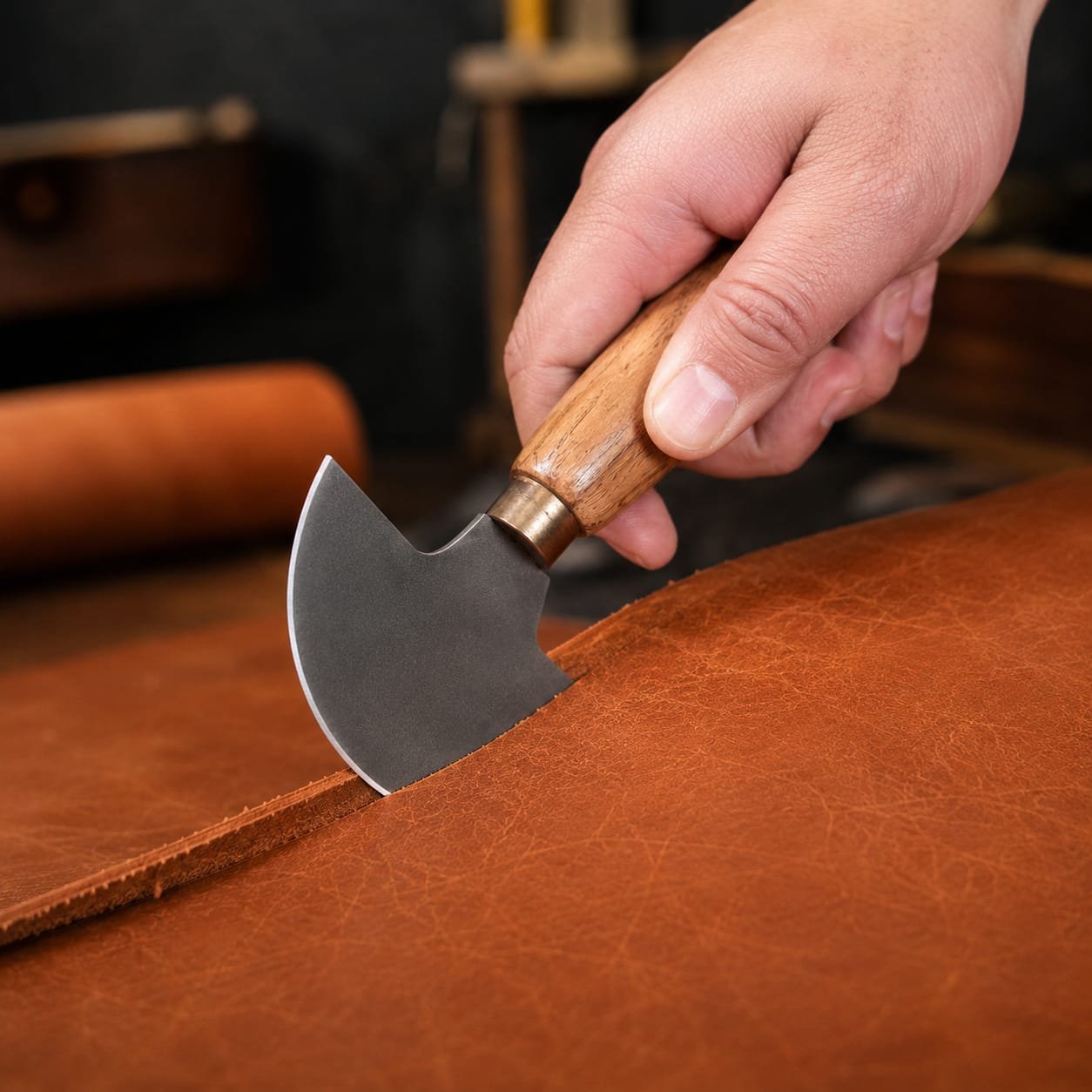
3. Head Knife (Round Knife)
The head knife is a traditional leather crafting tool preferred by experienced craftsmen.
Ideal For:
- Curved cuts
- Skiving
- Detailed shaping
- Precision leatherwork
4. Leather Shears
Heavy duty leather scissors are useful for cutting lightweight leather without damaging the edges.
They are commonly used for:
- Soft leather
- Lambskin
- Goat leather
- Fabric-backed leather
5. Strap Cutter
A strap cutter allows you to create perfectly uniform leather straps.
Common applications include:
- Belts
- Watch straps
- Bag handles
- Dog collars
- Guitar straps
6. Clicker Press Cutting Dies
Industrial leather manufacturers often use clicker press machines with steel rule dies.
Benefits include:
- Mass production
- High precision
- Identical pieces every time
- Increased productivity
These tools are commonly used for leather bags, gloves, wallets, and footwear production.
7. Laser Cutting Machines
Modern leather factories increasingly use laser cutting technology.
Advantages include:
- Computer controlled precision
- Complex designs
- Reduced labor
- Excellent repeatability
Laser cutting is especially useful for fashion accessories and custom leather goods.
Supporting Leather Cutting Tools
Professional leather workshops also use:
- Self healing cutting mats
- Steel rulers
- Acrylic templates
- French curves
- Scratch awls
- Pattern weights
- Edge guides
- Leather marking pens
- Compass dividers
These accessories improve cutting accuracy and safety.
How to Choose the Right Leather Cutting Tool
When selecting a leather cutting tool, consider:
Leather Thickness
Thin leather:
- Rotary cutter
- Leather shears
Medium leather:
- Utility knife
- Head knife
Thick leather:
- Heavy duty utility knife
- Clicker press
- Industrial cutting machine
Project Type
Wallets:
- Precision knife
- Head knife
Belts:
- Strap cutter
Garments:
- Rotary cutter
Leather bags:
- Utility knife
- Die cutting
Industrial production:
- Clicker press
- CNC cutting machine
- Laser cutter
Tips for Cleaner Leather Cuts
- Always use sharp blades.
- Replace dull blades regularly.
- Cut on a self healing mat.
- Secure leather before cutting.
- Use a metal ruler for straight lines.
- Cut with consistent pressure.
- Practice on leather scraps before cutting expensive hides.
Maintaining Leather Cutting Tools
Proper maintenance extends tool life and improves performance.
Maintenance tips:
- Clean blades after every project.
- Store tools in a dry environment.
- Sharpen reusable blades regularly.
- Oil metal tools to prevent rust.
- Replace damaged blades immediately.
Safety Tips
Working with sharp leather tools requires proper safety practices.
Always:
- Cut away from your body.
- Wear cut resistant gloves when appropriate.
- Keep blades covered when not in use.
- Maintain a clean workspace.
- Keep tools away from children.
Leather Cutting Tools Used in Professional Manufacturing
Large leather manufacturers often combine multiple cutting technologies:
- CNC leather cutting systems
- Hydraulic clicker presses
- Swing arm cutting presses
- Laser cutting machines
- Automatic nesting software
- Steel rule dies
These systems improve efficiency while minimizing leather waste.
Frequently Asked Questions
What is the best tool for cutting leather?
A sharp utility knife is the best all around leather cutting tool for most leatherworking projects. For industrial production, clicker presses and laser cutting machines provide greater speed and consistency.
Can you cut leather with regular scissors?
Regular household scissors are not recommended. Heavy duty leather shears or rotary cutters produce cleaner, more accurate cuts.
How often should leather blades be replaced?
Replace blades whenever cuts begin to drag, tear, or leave rough edges. Sharp blades are essential for professional results.
Is laser cutting safe for leather?
Yes. When used with proper ventilation and suitable leather types, laser cutting offers precise and repeatable results for many manufacturing applications.
Final Thoughts
Choosing the right leather cutting tool can significantly improve the quality of your leather products. Whether you’re creating handmade wallets, premium jackets, belts, bags, or running a full scale leather manufacturing business, investing in quality cutting tools leads to cleaner cuts, better craftsmanship, and less material waste.
Professional results begin with precision, and precision starts with the right leather cutting tools.