How to Choose the Right Leather Jacket: A Complete Buying Guide
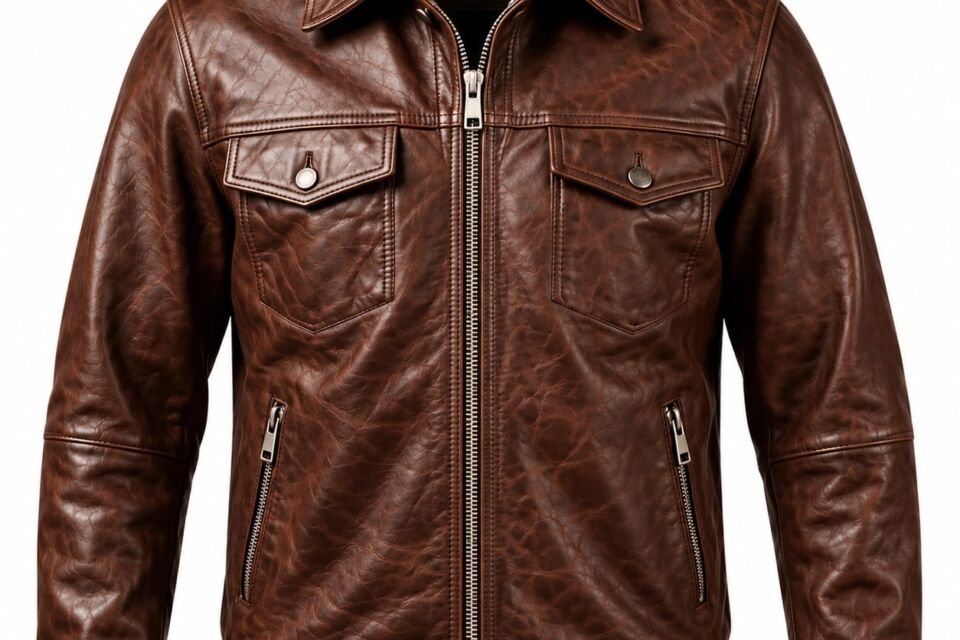
A leather jacket is a long-term wardrobe investment, but choosing the right one can be difficult with so many styles, leather types, fits, and colors available. The right leather jacket should match your personal style, intended use, climate, and preferred fit.
Whether you are looking for a classic everyday jacket, a motorcycle-inspired design, or a warm winter layer, understanding the important features can help you make a better choice.
1. Choose the Right Leather Type
The leather used to make a jacket affects its appearance, durability, softness, and price.
Full-Grain Leather
Full-grain leather uses the outer layer of the hide and retains much of its natural grain. It is known for durability and developing a natural patina over time.
Top-Grain Leather
Top-grain leather is also made from the upper portion of the hide but is usually processed to create a more uniform appearance. It can offer a balance between durability and a smoother finish.
Genuine Leather
Genuine leather is a broad commercial term referring to leather made from real animal hide. Quality can vary considerably, so it is useful to ask about the specific leather and construction rather than relying on the term alone.
Faux Leather
Faux leather is synthetic rather than animal leather. It can provide a leather-like appearance at a lower price and is available in many colors and finishes.
2. Select a Jacket Style
Different leather jacket styles are designed for different looks and purposes.
Leather Bomber Jacket:
A good choice for casual everyday outfits. Bomber designs commonly feature a shorter body and a relaxed silhouette.
Leather Biker Jacket:
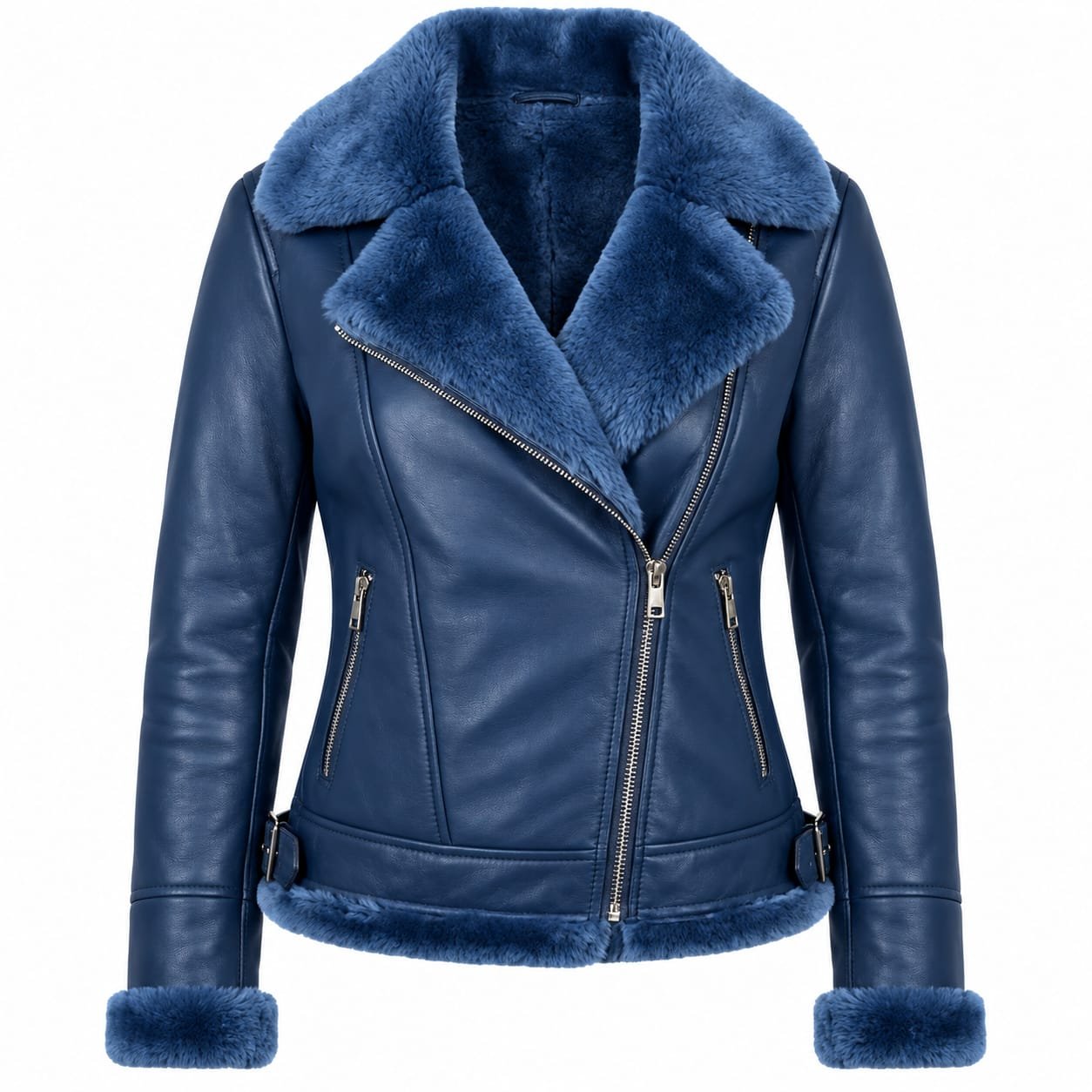
Recognized for its distinctive asymmetric or offset zipper, lapels, and zippered pockets. It works well with casual and motorcycle-inspired outfits.
Leather Aviator Jacket:
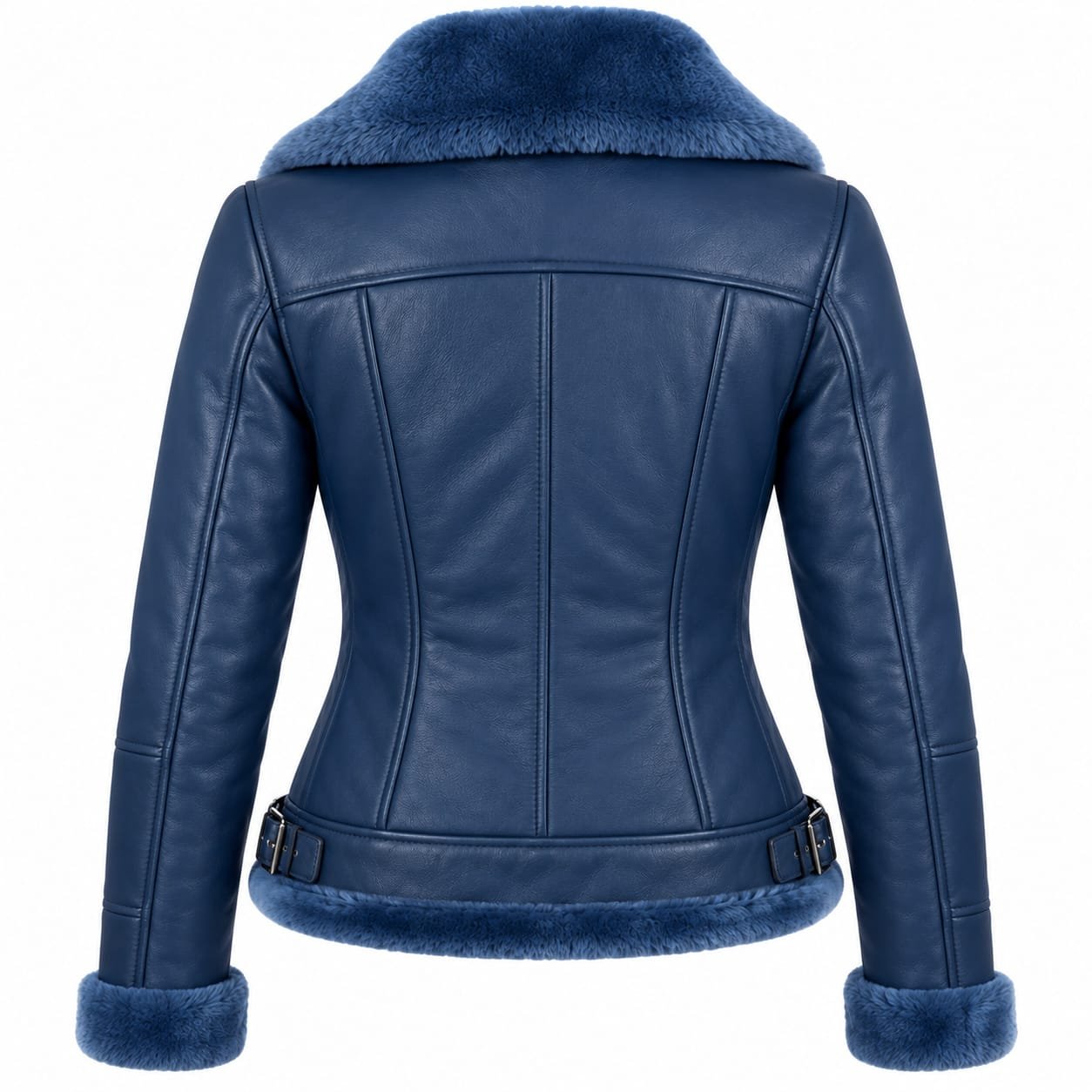
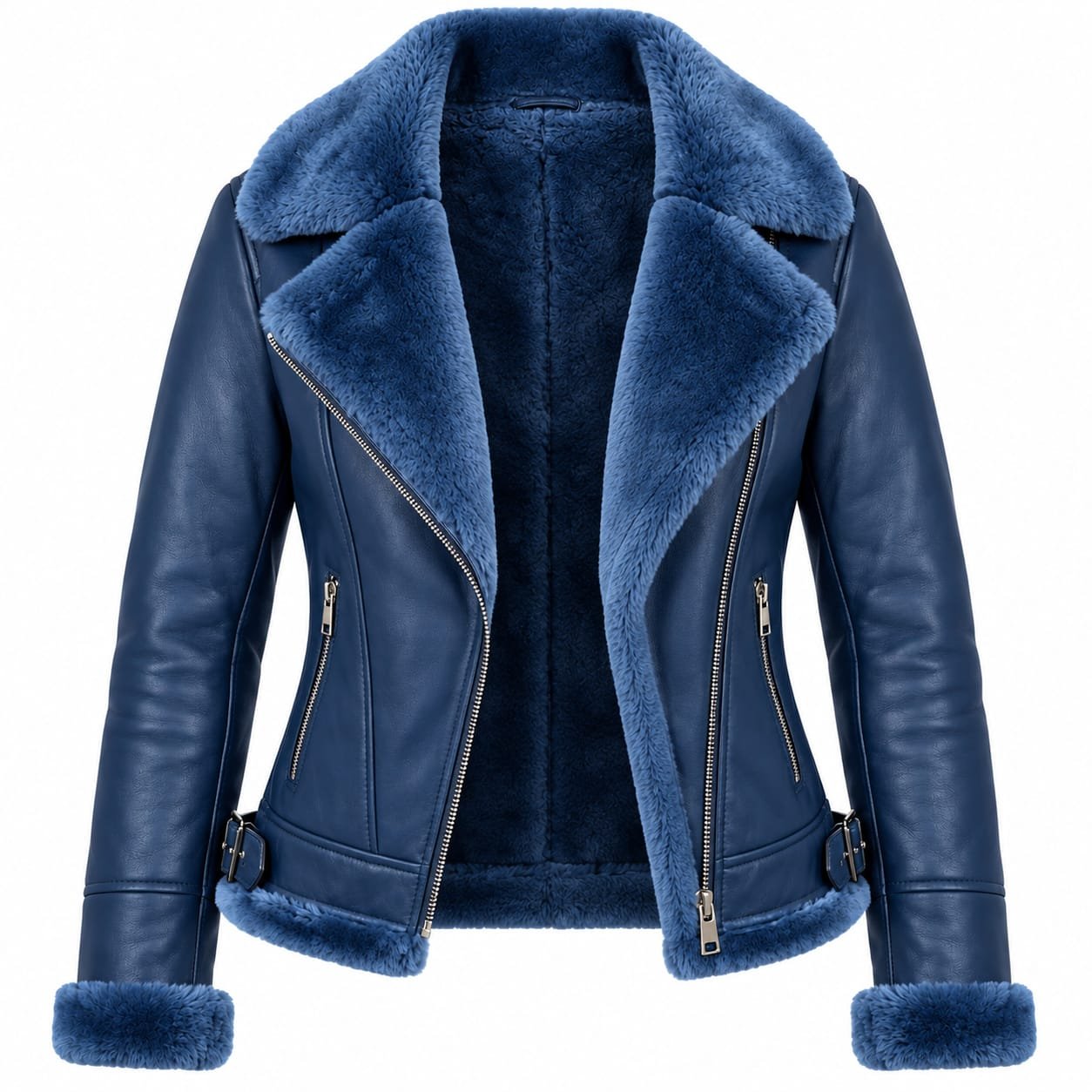
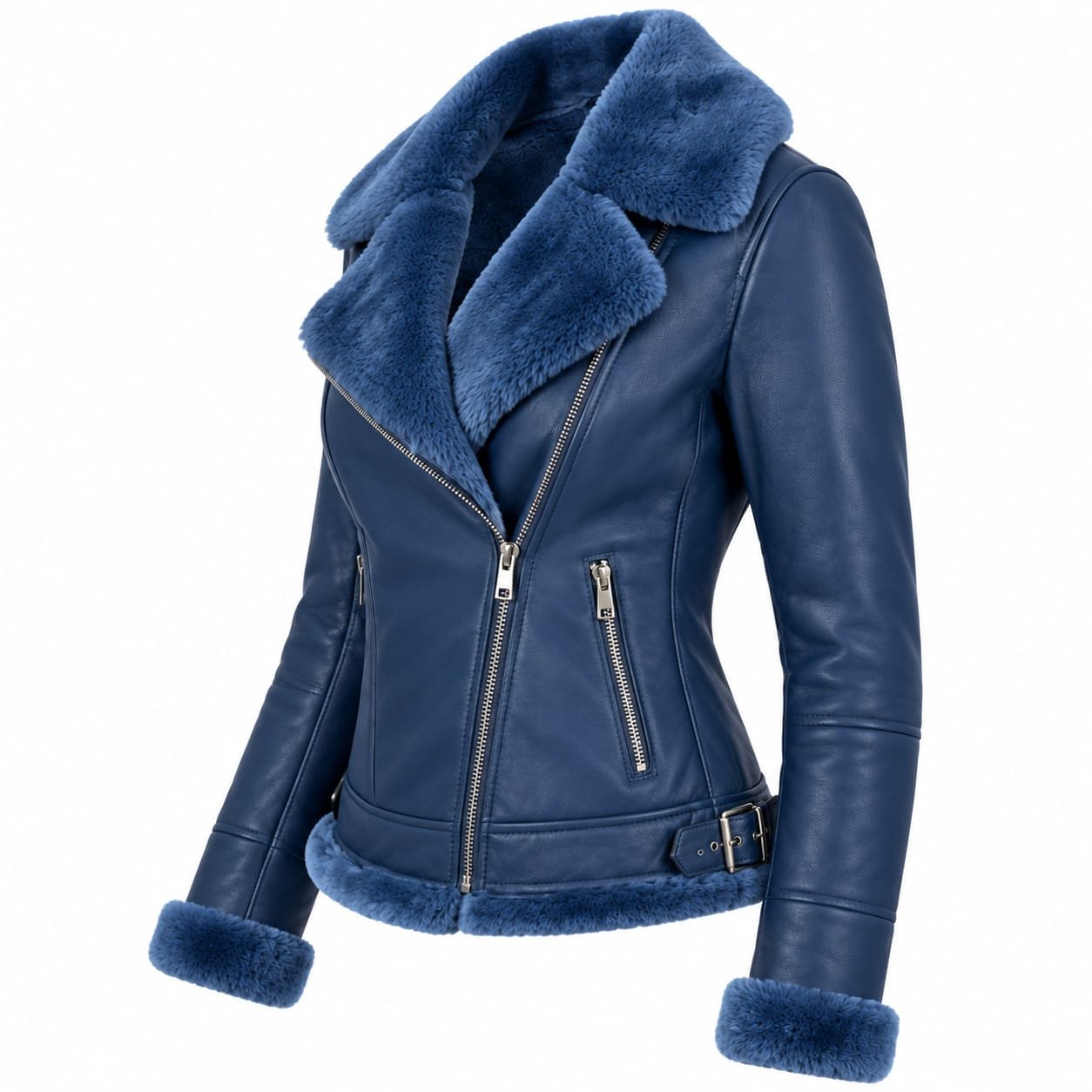
Often associated with flight-inspired styling and may feature shearling or fur collars for additional warmth.
Leather Racer Jacket:
Usually has a clean, minimal design with a straight front zipper and a stand collar.
Leather Field Jacket:
Typically longer and designed with multiple practical pockets, making it suitable for utility-inspired everyday wear.
3. Get the Right Fit
Fit is one of the most important factors when buying a leather jacket.
The shoulder seams should sit close to the edge of your shoulders without hanging too far over them. The jacket should allow comfortable movement through the arms and chest without excessive looseness.
When checking the sleeves, make sure they reach approximately to your wrist when your arms are relaxed.
For a fitted appearance, choose a jacket that follows your body without being excessively tight. Remember that leather jackets generally have limited stretch compared with knitted or fabric outerwear.
4. Consider Your Climate
Think about when you plan to wear the jacket.
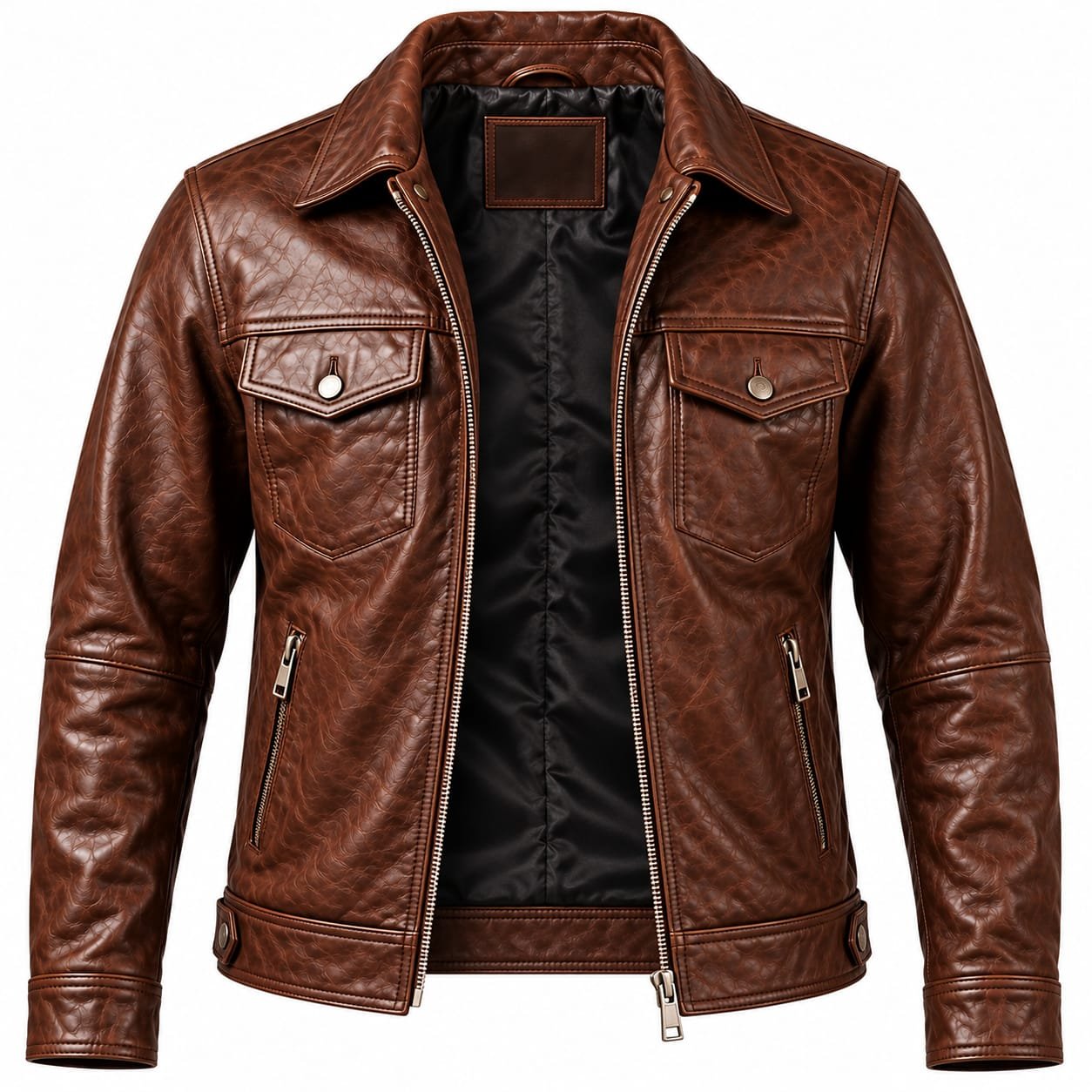
For mild weather, a lightweight leather jacket with a simple lining may be sufficient. For colder conditions, look for insulated designs, quilted linings, or shearling-lined leather jackets.
A full-fur or shearling-lined jacket can provide considerably more warmth than an unlined leather jacket, making it more suitable for winter use.
5. Choose a Practical Color
Black and brown remain versatile choices for leather jackets.
Black leather jackets work particularly well with monochrome outfits, denim, boots, and streetwear.
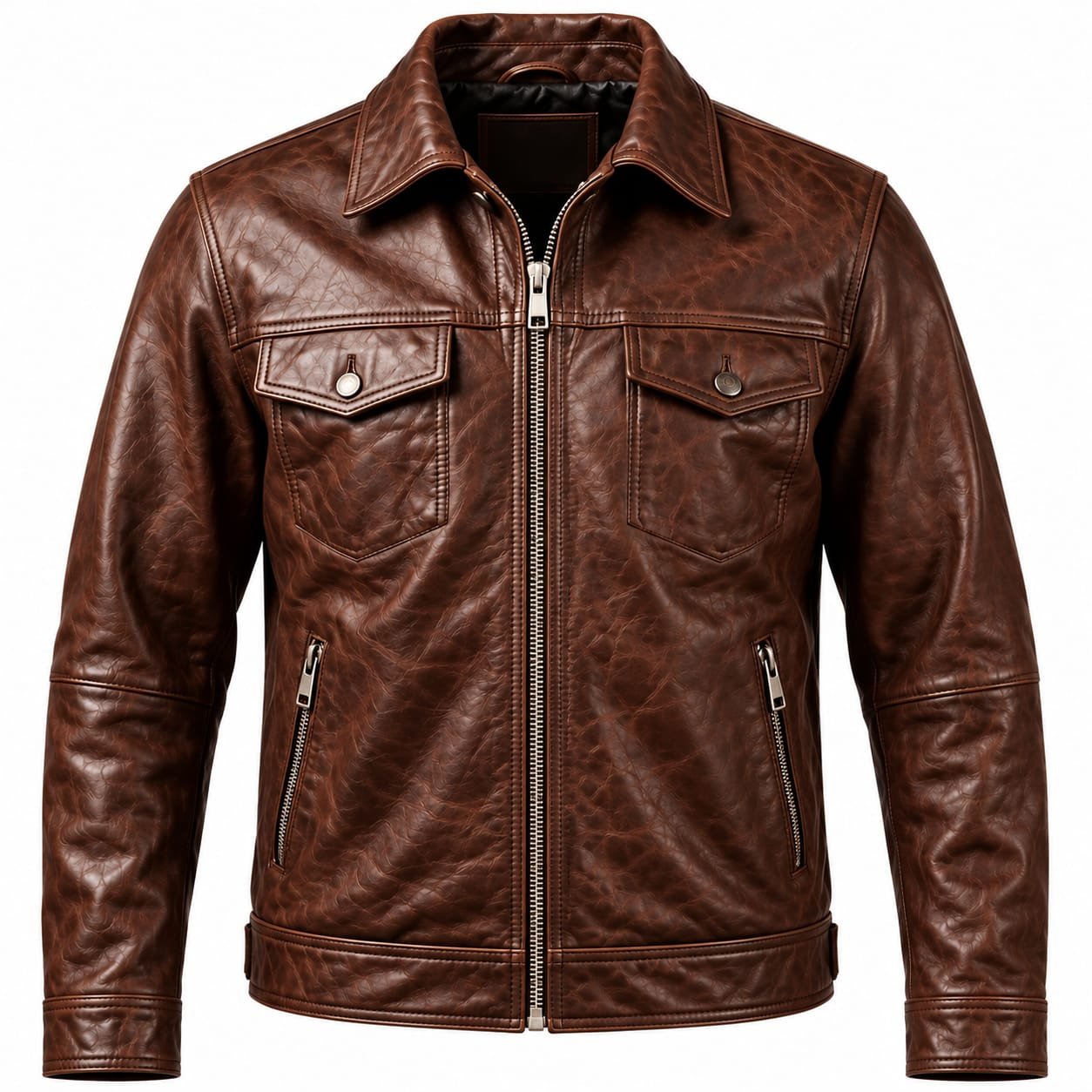
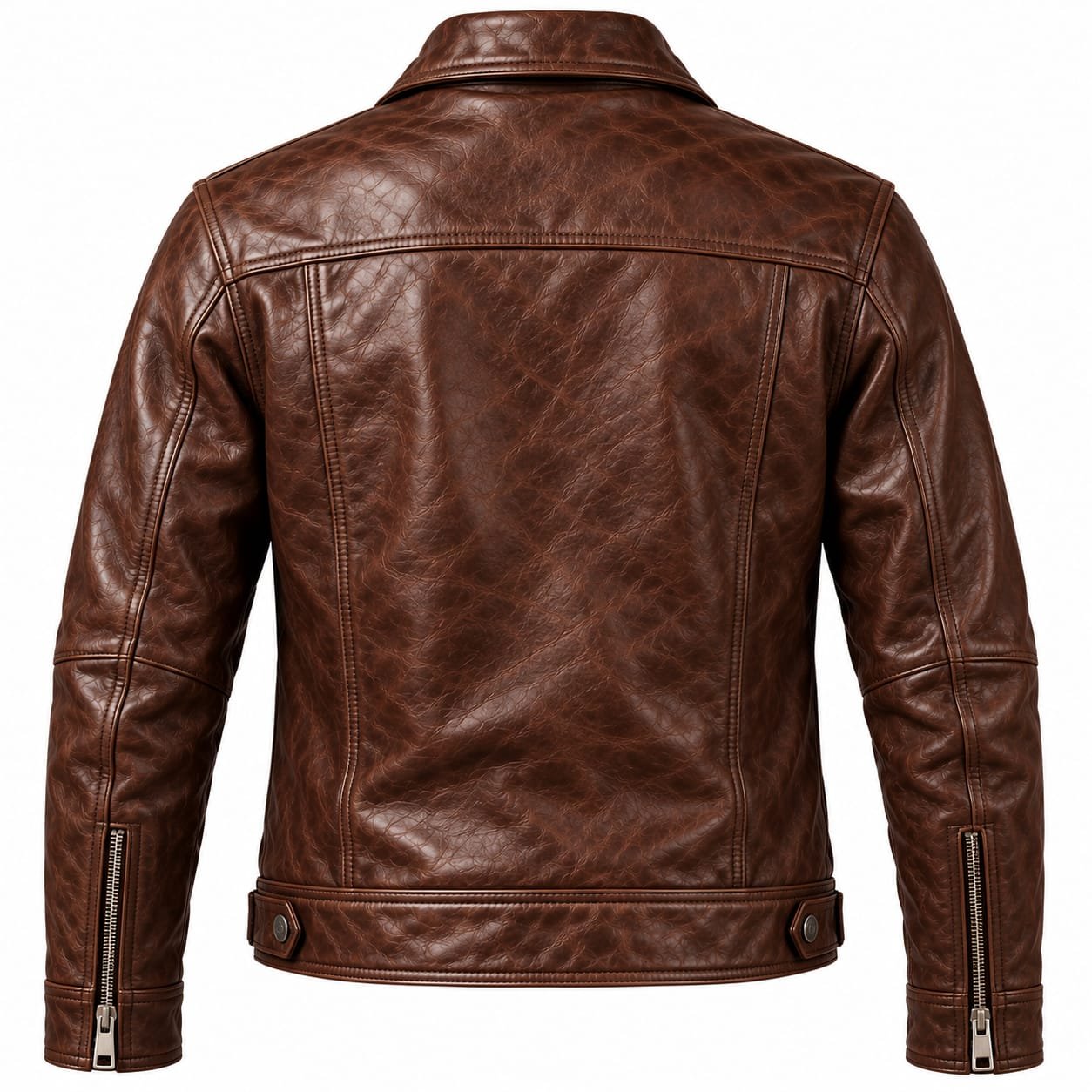
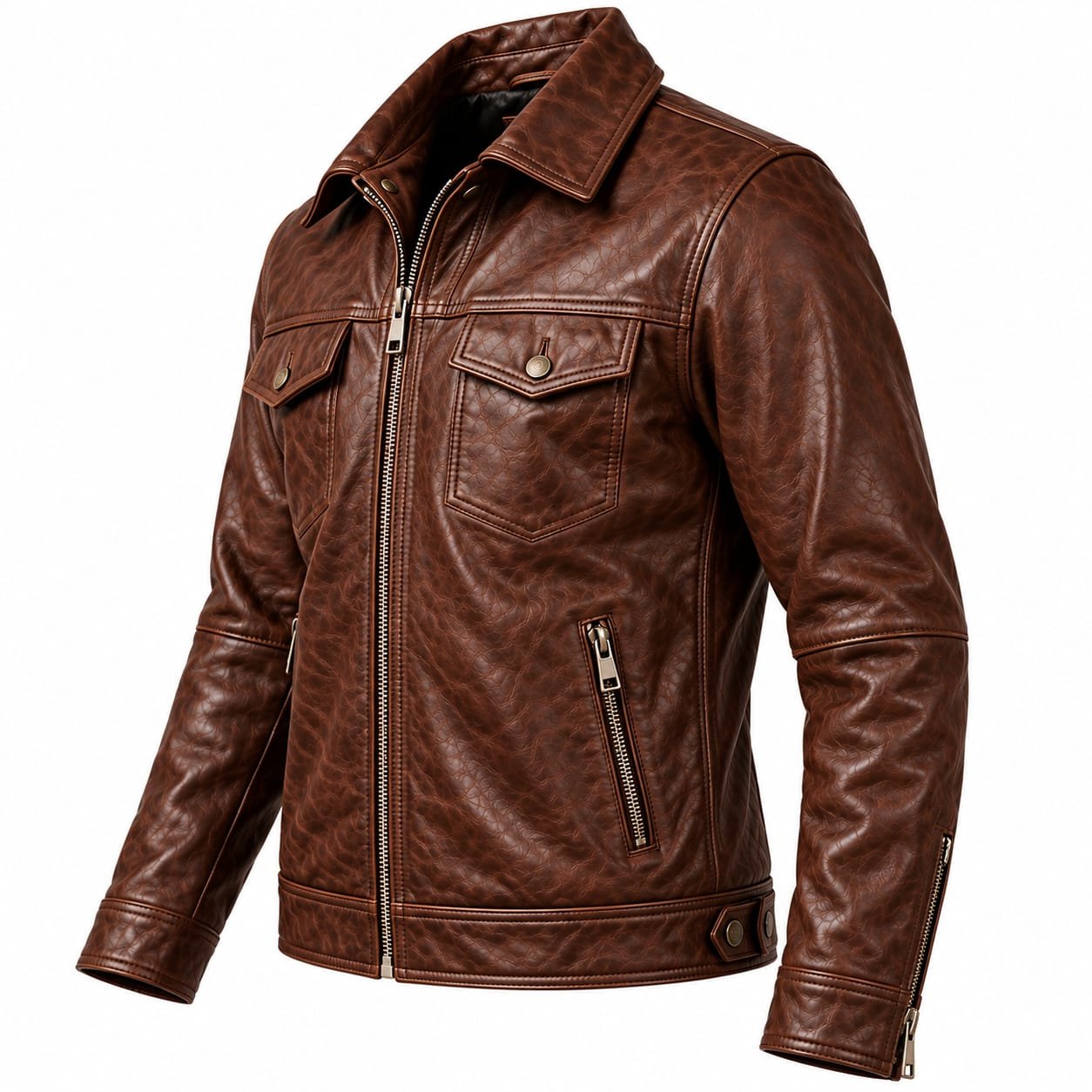
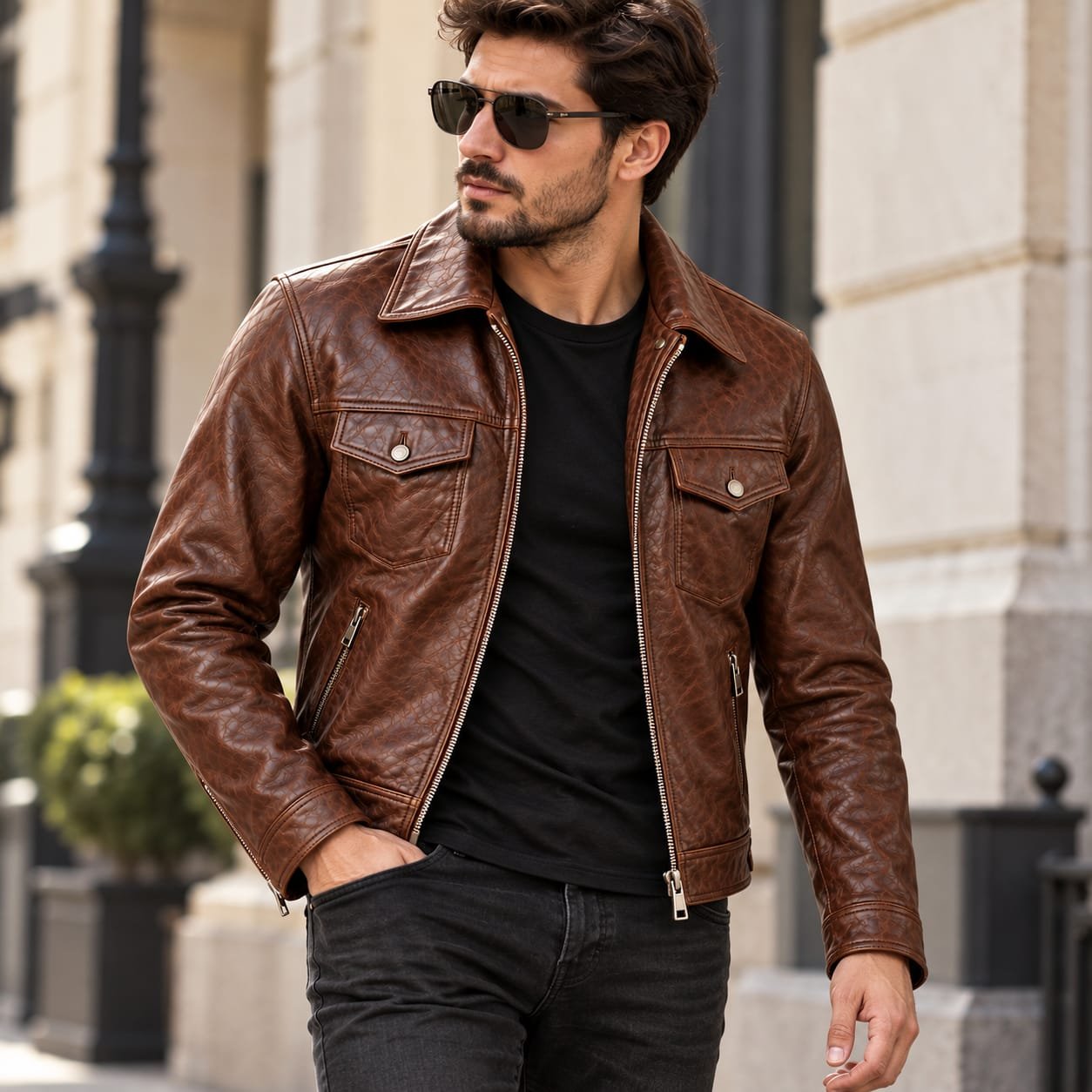
Brown leather jackets create a warmer and more classic appearance and pair well with blue jeans, chinos, neutral sweaters, and casual shirts.
Other colors such as navy, burgundy, tan, and olive can create a more distinctive look.
6. Check the Construction
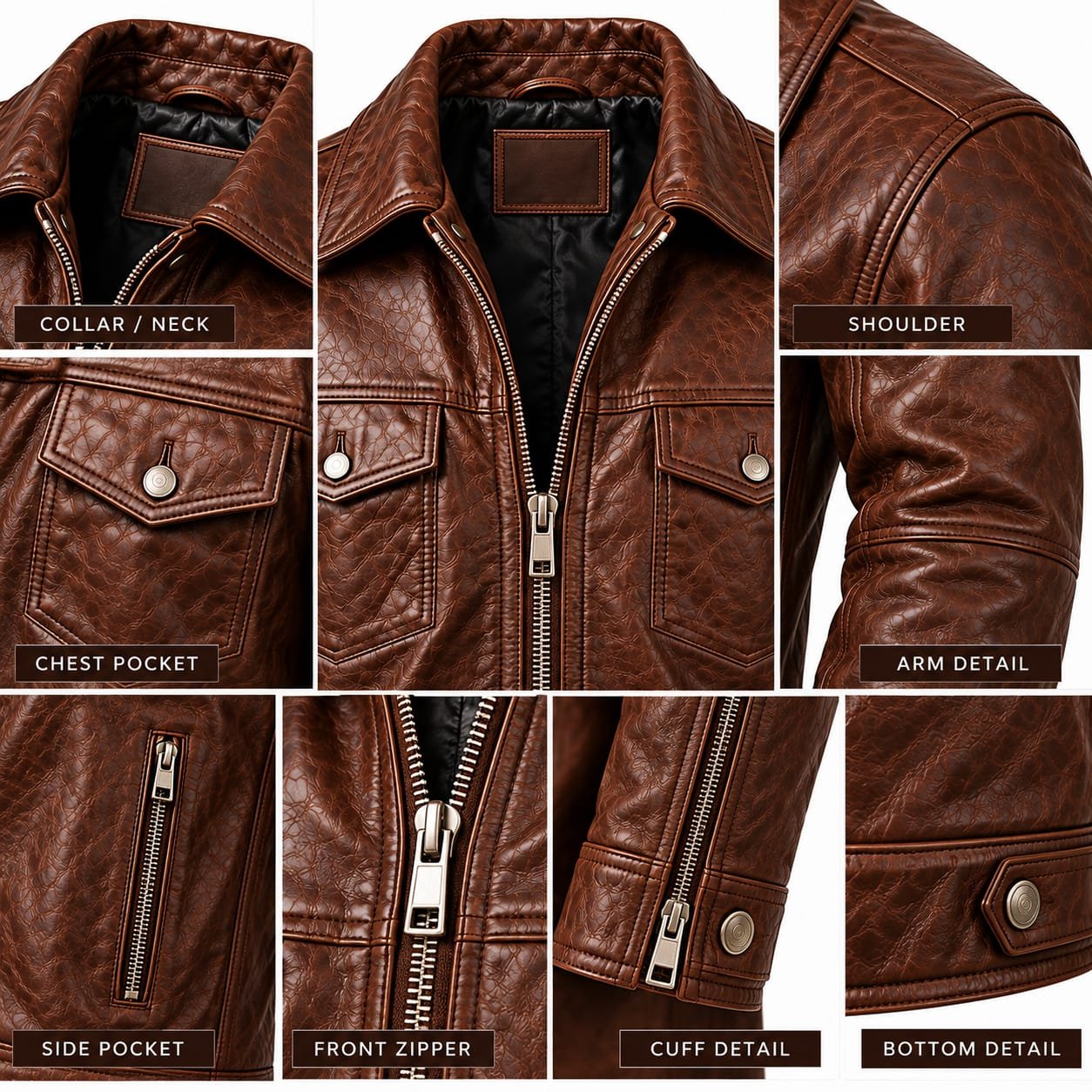
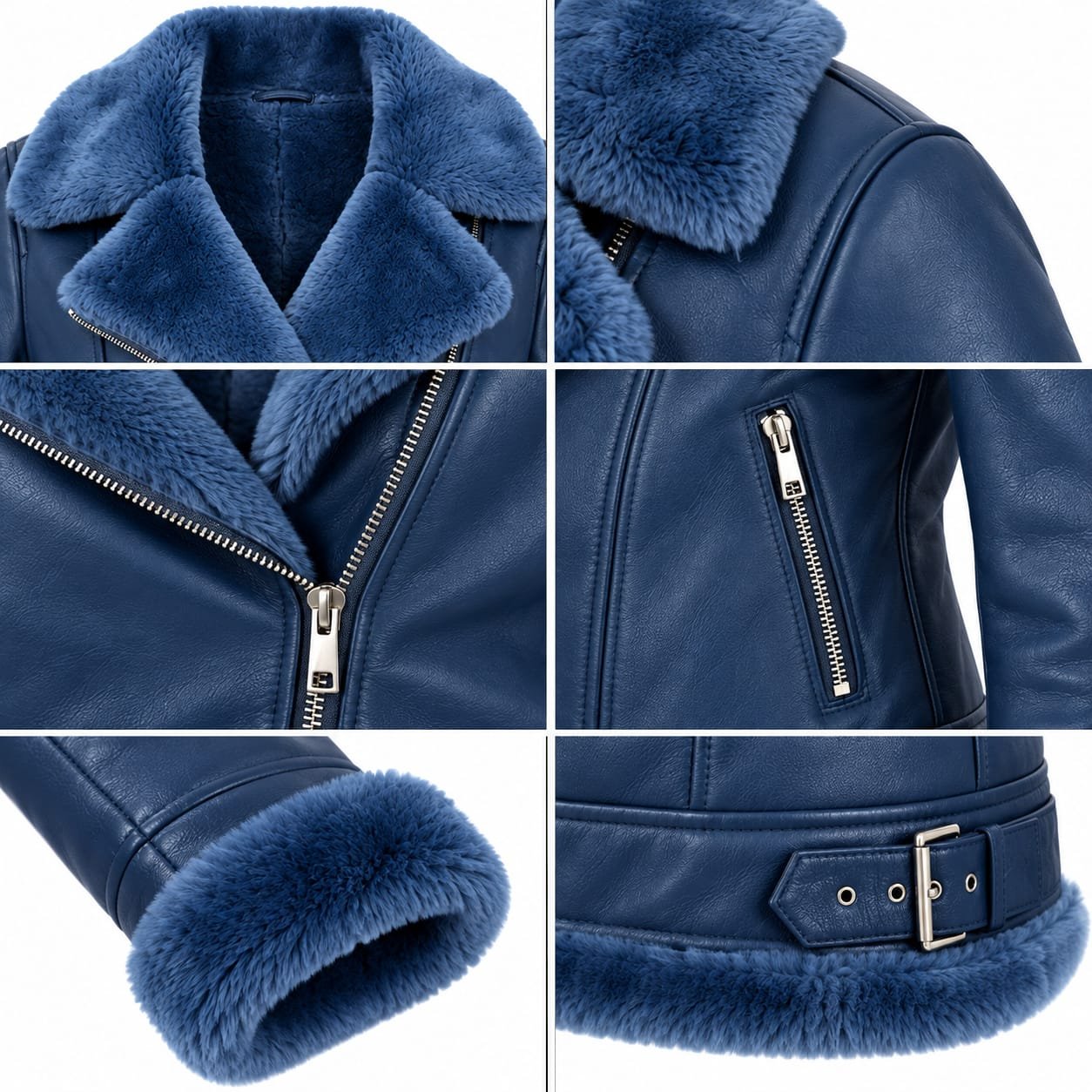
Don’t judge a leather jacket only by its appearance. Examine the construction carefully.
Look for:
- Strong and consistent stitching
- Secure zippers and hardware
- Well-finished seams
- Durable pocket construction
- Quality lining
- Reinforced stress points
- Properly attached buttons and buckles
Good construction can have a significant effect on how well a jacket performs over time.
7. Think About How You Will Wear It
Before buying, consider your normal wardrobe.
If you mainly wear jeans and sneakers, a simple bomber or racer jacket may work well. If you prefer motorcycle-inspired clothing, a biker jacket may be more appropriate. For colder weather, an aviator or shearling jacket can provide additional warmth.
The best leather jacket is not necessarily the most complicated design. It is the one that fits your lifestyle and works with the clothes you already wear.
8. Consider Custom Leather Jackets
If standard sizing does not provide the fit you want, a custom leather jacket can be an alternative. Custom manufacturing can allow you to specify measurements, leather type, color, lining, hardware, pockets, and other design details.
For businesses and clothing brands, manufacturers can also produce leather jackets according to custom specifications and branding requirements.
Final Thoughts
Choosing the right leather jacket comes down to several factors: leather type, style, fit, climate, construction, color, and intended use. Take time to compare these features before making a purchase.
A well-selected leather jacket can become a versatile part of your wardrobe and, with proper care, can be worn for many years.
Explore leather jacket styles from Zentro Leather and discover designs made for different seasons, styles, and preferences.