How Leather Jackets Are Made: A Step-by-Step Guide
Leather jackets have remained a popular choice in fashion for decades. From classic biker jackets and cafe racer designs to modern bomber jackets and shearling styles, they offer a distinctive combination of style, versatility, and durability.
However, creating a quality leather jacket involves much more than stitching pieces of leather together. The process requires careful material selection, accurate pattern making, skilled cutting, precise sewing, appropriate hardware, and detailed quality inspection.
At Zentro Leather, we understand the importance of construction, materials, and finishing when creating leather outerwear. Whether you are shopping for a leather jacket or planning to launch your own clothing brand, understanding the leather jacket manufacturing process can help you make better decisions.
In this guide, we explain how leather jackets are made, from the initial design concept to the finished garment.
1. Leather Selection and Material Inspection
The first step in leather jacket manufacturing is selecting the appropriate material. The choice of leather affects the jacket’s appearance, texture, weight, flexibility, and overall performance.
Different leather types are suitable for different jacket designs.
Full-Grain Leather
Full-grain leather retains the natural grain surface of the hide. It can feature natural markings and develop character through use. It is commonly chosen for premium leather products where the natural appearance of the material is important.
Top-Grain Leather
Top-grain leather has a more refined surface than full-grain leather and may undergo additional finishing. Its appearance and feel depend on the specific processing and coating used.
Lambskin Leather
Lambskin is generally soft, lightweight, and flexible. It is often selected for fashion jackets that require a smooth finish and a comfortable feel.
Cowhide Leather
Cowhide is frequently used for biker jackets, motorcycle-inspired outerwear, and structured leather garments. Its weight and firmness depend on the hide and processing method.
Suede Leather
Suede has a soft, napped surface that creates a different appearance from smooth leather. It is often used for casual jackets and contemporary fashion designs.
Before production begins, manufacturers inspect the leather for unwanted marks, holes, inconsistent thickness, color variation, and other defects that could affect the finished product.
The appropriate material depends on the design, target price, intended use, and customer’s specifications.
2. Designing the Leather Jacket
Once the material has been selected, the next step is developing the jacket design.
Designers determine the jacket’s overall silhouette, collar shape, sleeve construction, pocket placement, closures, lining, and decorative details.
Popular designs include:
- Biker jackets: Often feature asymmetrical zippers, snap details, and multiple pockets.
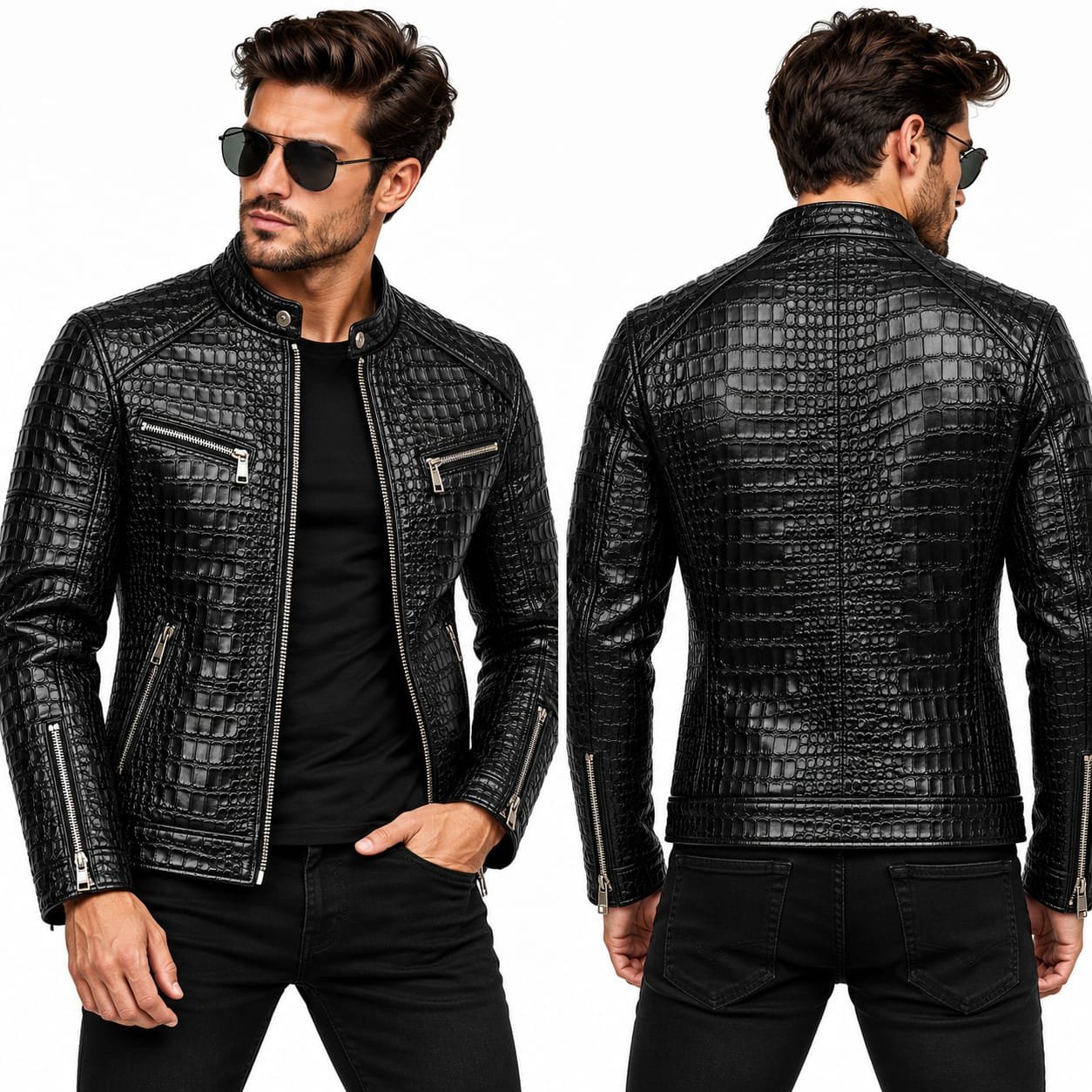
- Cafe racer jackets: Usually have a streamlined silhouette, a stand-up collar, and minimal decoration.
- Bomber jackets: Commonly feature a relaxed shape and may include ribbed cuffs and hems.
- Aviator jackets: Inspired by traditional flight jackets, sometimes incorporating shearling collars or linings.
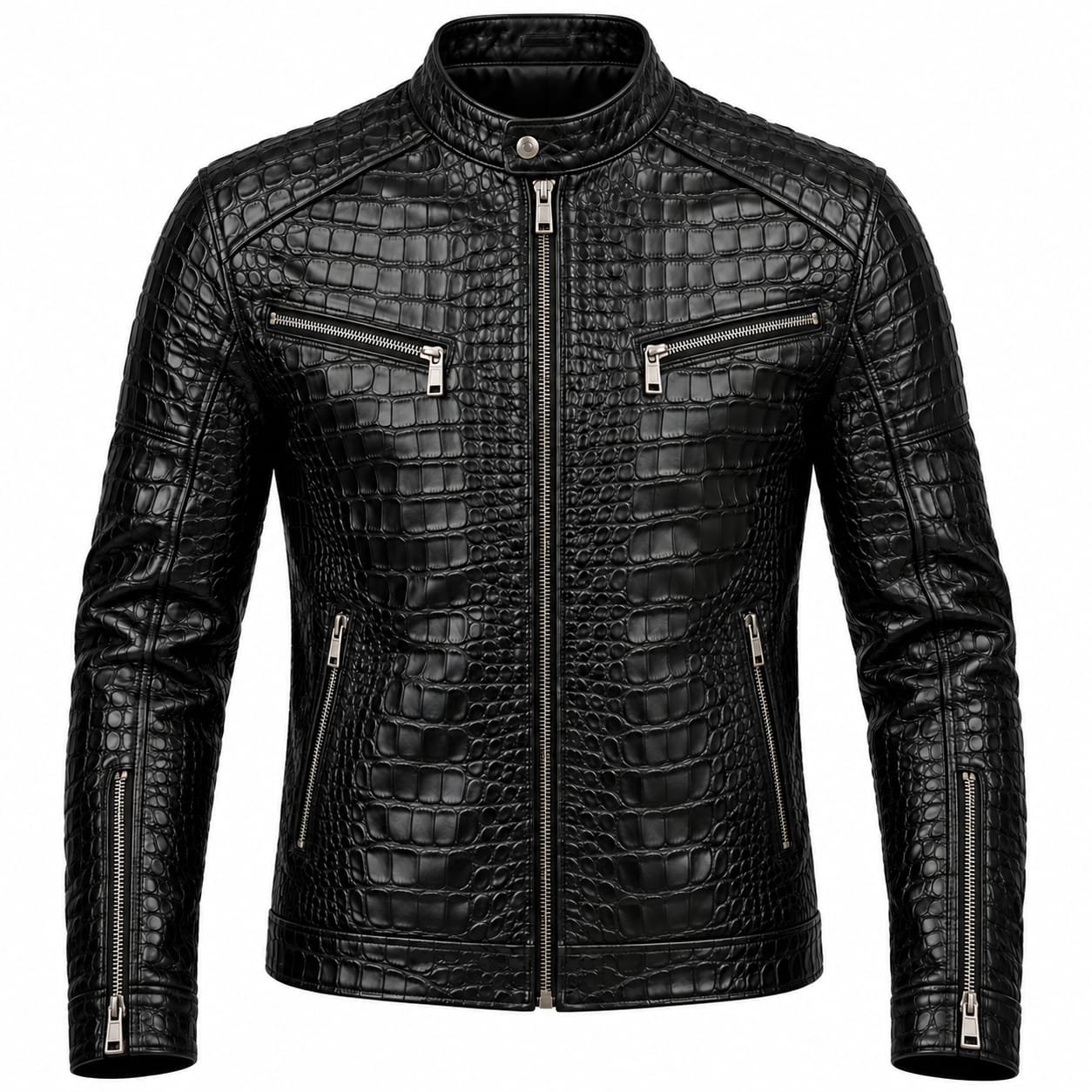
- Fashion leather jackets: May include embossed textures, decorative panels, unusual colors, or distinctive hardware.
At this stage, the manufacturer also determines construction details such as seam placement, reinforcement areas, pocket dimensions, and lining requirements.
For clothing brands, clear design specifications help ensure that the finished jacket matches the intended product.
3. Pattern Making and Size Development
Pattern making converts the design into individual garment pieces that can be cut and assembled.
A pattern maker develops the shapes required for the front panels, back panel, sleeves, collar, cuffs, pocket components, lining, and other parts.
Each pattern must account for the jacket’s intended fit and construction method.
For example, a slim-fit cafe racer jacket requires different proportions from an oversized leather bomber. A motorcycle-inspired jacket may also require additional room or construction considerations for its intended use.
Size Grading
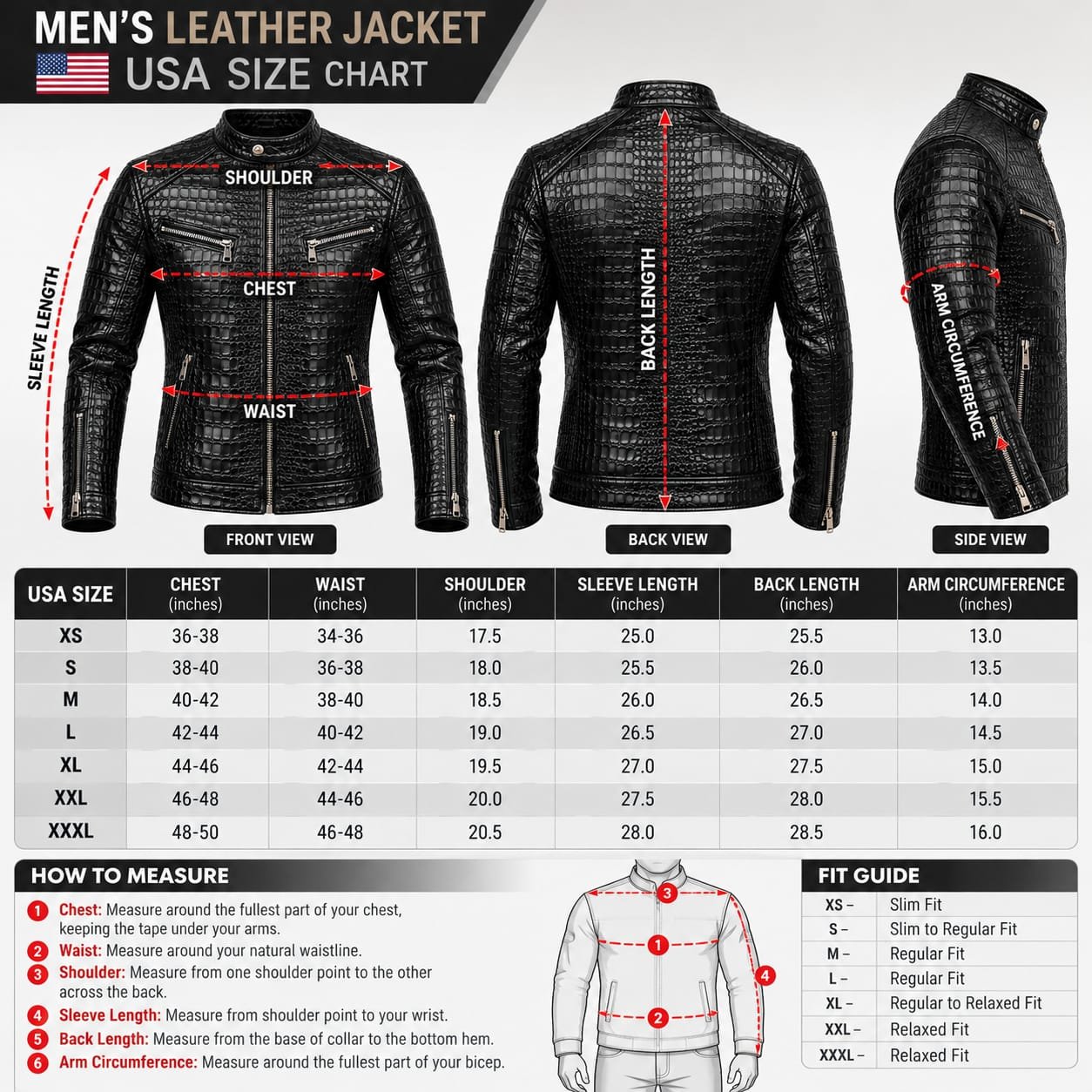
After the base pattern has been developed, it can be graded into different sizes, such as XS, S, M, L, XL, and XXL.
Accurate grading helps maintain consistent proportions across the size range. Manufacturers may also prepare measurement charts and sample garments for customer approval before bulk production.
For brands selling internationally, it is important to agree on the measurement system and size specifications before manufacturing begins.
4. Leather Cutting
Leather cutting is one of the most important stages in the manufacturing process because mistakes can waste valuable material and affect the appearance of the final jacket.
The pattern pieces are arranged on the leather to make efficient use of the available surface while avoiding visible defects.
Cutting may be performed manually using specialized cutting tools or with suitable machinery, depending on the factory’s equipment, production volume, and construction requirements.
Experienced cutters consider several factors:
- Natural marks and surface defects
- Leather thickness and consistency
- Grain direction and visual appearance
- Color matching between panels
- Efficient material utilization
- Correct positioning of pattern pieces
Unlike woven fabric, leather is not a uniform sheet. Each hide has its own shape, texture, and natural characteristics. Careful cutting is therefore essential for achieving a consistent result.
The lining and other fabric components are also cut according to their respective patterns.
5. Panel Preparation and Reinforcement
After cutting, the individual pieces are prepared for assembly.
Depending on the design, this stage may include marking stitching lines, thinning selected edges, preparing zipper openings, attaching pocket components, and applying suitable reinforcement materials.
Some areas require additional attention because they experience repeated movement or stress. These may include pocket openings, zipper ends, sleeve openings, and other structural points.
Decorative elements such as embossed panels, contrast leather inserts, and stitched sections may also be prepared at this stage.
Good preparation helps improve assembly accuracy and the overall finish of the jacket.
6. Sewing and Garment Assembly
Sewing brings the separate leather panels together to form the jacket.
Leather requires appropriate needles, thread, machine settings, and handling techniques. Stitching holes can remain visible in leather, so accurate sewing is particularly important.
Depending on the design, the manufacturing sequence may include assembling the front panels, joining the back panels, attaching the shoulders, sewing the sleeves, and constructing the collar.
The exact order varies according to the jacket pattern and factory production method.
Why Stitching Quality Matters
Consistent stitching contributes to both the appearance and structural integrity of a leather jacket.
Manufacturers check for straight seam lines, suitable stitch density, secure thread ends, and clean intersections. They also inspect areas where several panels meet to ensure that the construction remains neat.
A jacket with carefully aligned seams and properly finished edges generally presents a more professional appearance than one with uneven stitching or poorly matched panels.
7. Installing Zippers, Buttons, and Other Hardware
Hardware is an important part of many leather jacket designs.
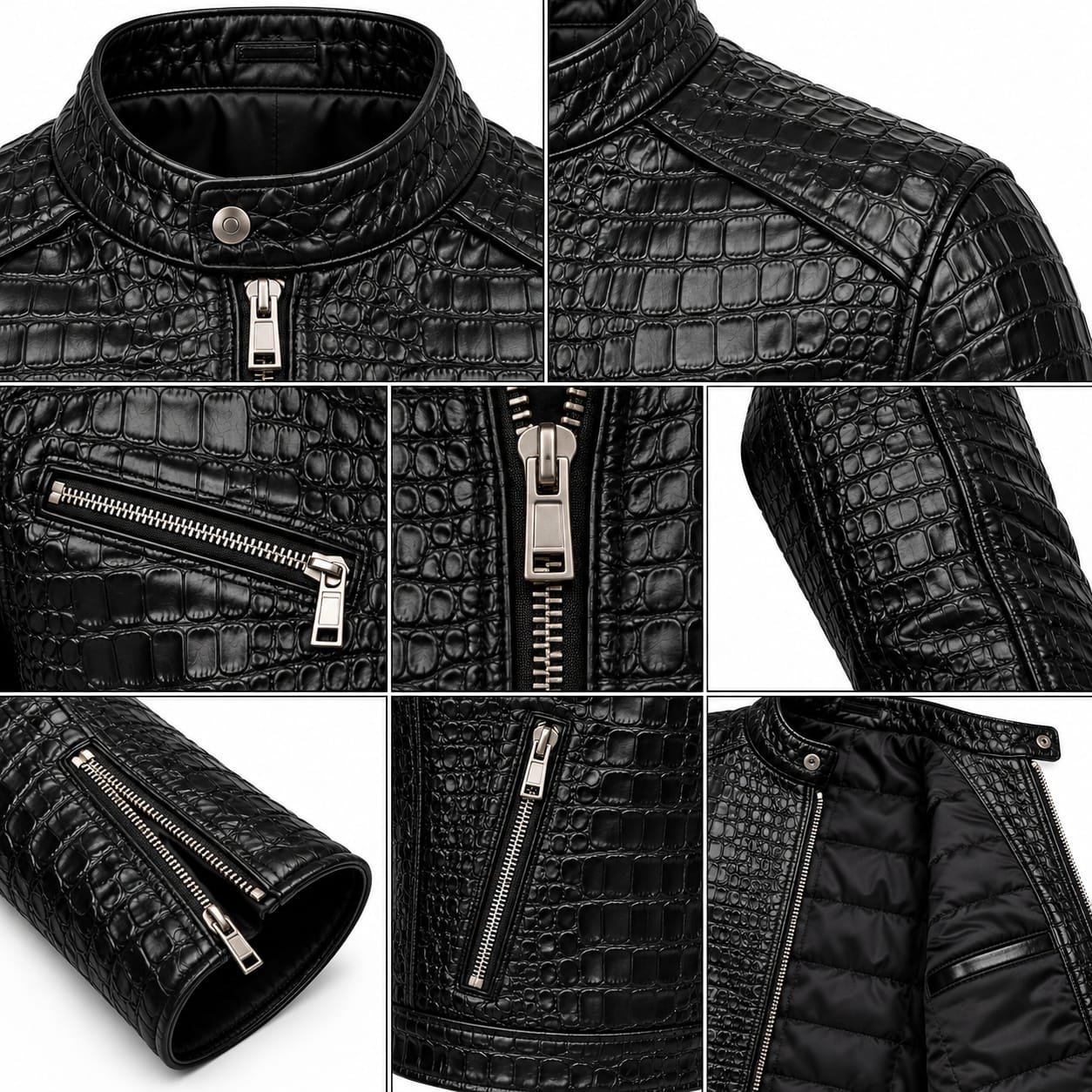
Depending on the style, a jacket may include a front zipper, chest pocket zippers, waist pocket zippers, cuff zippers, snap buttons, buckles, or decorative metal components.
Before installation, the manufacturer confirms the placement, size, finish, and functionality of the hardware.
Zippers should operate smoothly and sit correctly within their openings. Buttons and snaps should fasten securely, while decorative components should be positioned consistently.
Hardware finishes may include silver-tone, antique brass, black, or other colors selected to complement the design.
For private-label products, brands may specify custom zipper pulls, branded buttons, or other approved details where practical.
8. Adding the Lining and Insulation
The inside of a leather jacket affects comfort, appearance, and suitability for different seasons.
Common lining materials include polyester, satin-like fabrics, and other textile linings selected for the product’s intended price and performance.
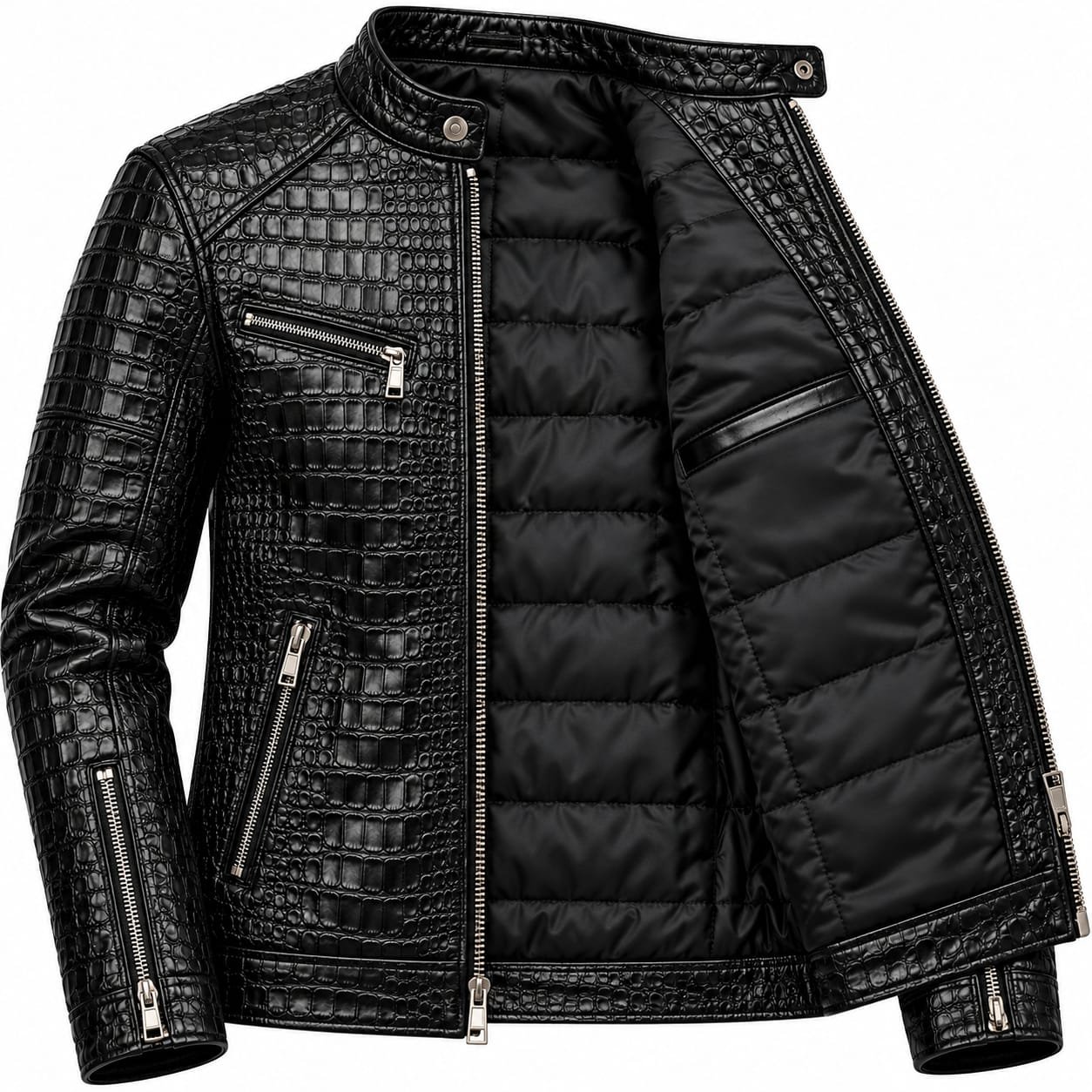
Some jackets have lightweight linings for transitional weather, while others incorporate quilted linings or insulation for additional warmth.
Shearling-style jackets require special consideration because the lining or wool-bearing material is an important part of the design.
The lining is prepared and attached carefully so that it sits correctly inside the jacket without unnecessary twisting, bunching, or pulling.
The choice of lining should match the intended use of the garment rather than being treated as a purely decorative decision.
9. Collar, Cuffs, Pockets, and Finishing Details
Once the main construction is complete, the manufacturer finishes the smaller components that define the jacket’s appearance.
These may include attaching the collar, completing cuffs, finishing pocket openings, securing tabs, adding decorative stitching, and checking the alignment of panels.
Different styles require different finishing details.
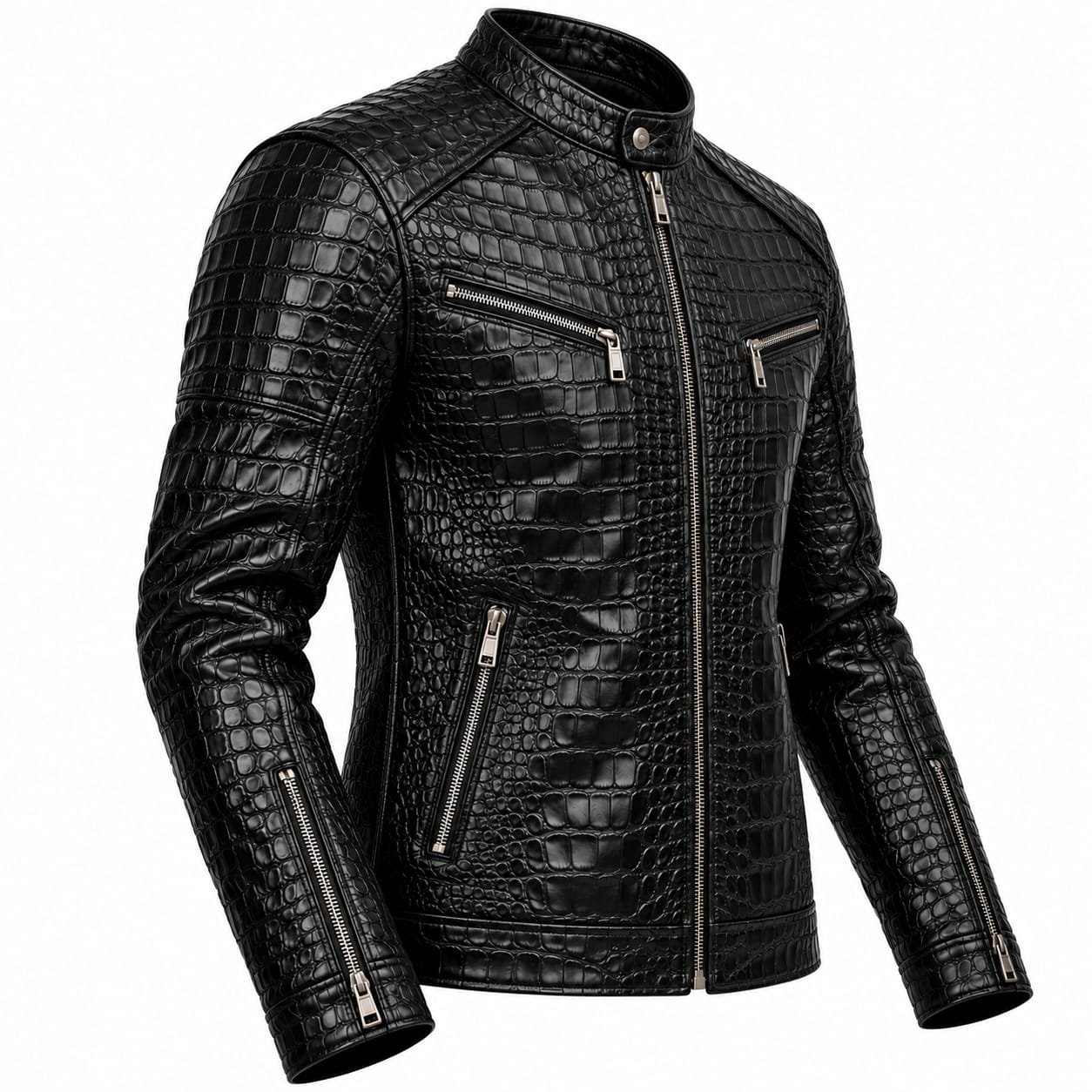
A cafe racer jacket may feature a simple stand-up collar and minimal decoration. A bomber jacket may use ribbed cuffs and a ribbed hem. A biker jacket may include multiple zipper pockets and snap-button details.
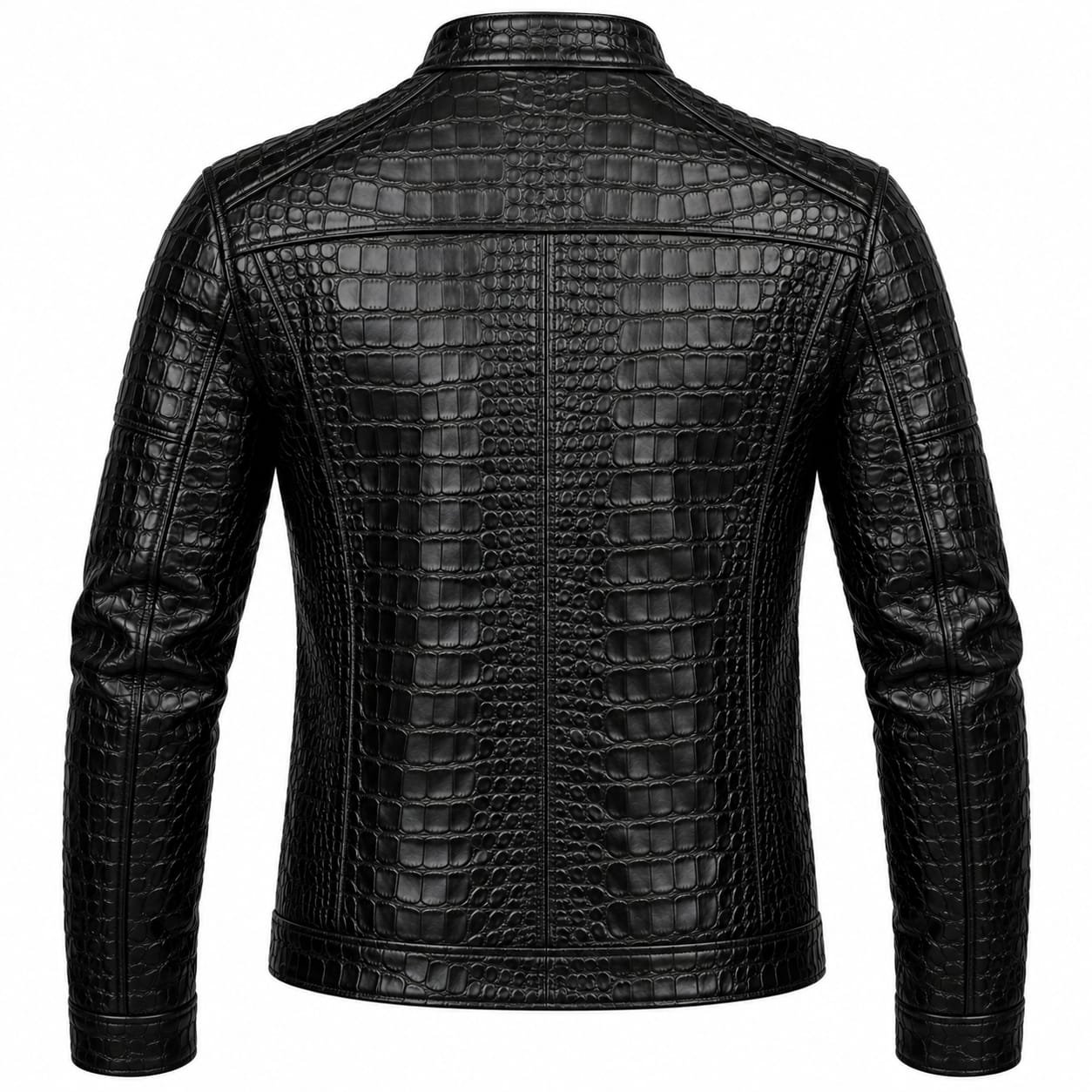
For textured or embossed leather, manufacturers also check that the pattern looks consistent across visible panels.
These finishing operations help bring the original design together into a complete garment.
10. Quality Control and Final Inspection
Quality control is essential before a leather jacket is approved for packing or shipment.
The finished garment is inspected against the agreed design specifications, measurements, materials, and workmanship standards.
A typical inspection may cover:
- Material: Check that the supplied leather matches the agreed specification.
- Stitching: Look for loose threads, uneven seams, skipped stitches, and weak construction.
- Zippers: Confirm smooth operation and secure attachment.
- Measurements: Compare the garment with the approved size chart.
- Symmetry: Check the alignment of sleeves, pockets, collar, and front panels.
- Lining: Inspect attachment, comfort, and visible finishing.
- Appearance: Review color consistency, surface condition, and overall presentation.
- Branding: Confirm the correct placement of labels and approved branding details.
Natural leather may contain individual characteristics, so acceptance standards should distinguish normal material variation from genuine defects.
Any issues identified during inspection should be reviewed and corrected where possible before the garment is approved.
11. Final Cleaning, Pressing, and Packaging
After inspection, the jacket receives the appropriate final preparation.
Loose threads may be removed, surfaces cleaned using suitable methods, and the garment shaped or pressed using techniques appropriate for the leather and lining.
Leather cannot always be treated like ordinary fabric. Excessive heat or unsuitable cleaning products may damage its finish, so the finishing method must be appropriate for the material.
The jacket is then folded or hung according to the packaging requirements. Protective packaging helps reduce the risk of scratches, creasing, moisture exposure, and damage during transportation.
For retail brands, packaging may also include product labels, size labels, care information, hangtags, and branded packaging components.
12. How Long Does Leather Jacket Manufacturing Take?
The production timeline depends on the design, material availability, sample approval, order quantity, hardware requirements, and factory capacity.
A simple design using readily available materials may be easier to produce than a jacket requiring custom patterns, special leather finishes, custom hardware, or complex construction.
The development and production process may include:
- Design review and specification confirmation
- Material sourcing and approval
- Pattern development and sample making
- Sample review and revisions
- Bulk cutting and sewing
- Finishing and quality inspection
- Packaging and dispatch preparation
There is no single production timeline that applies to every leather jacket. Brands should confirm sampling and bulk production schedules with their manufacturer before placing an order.
13. What Should Clothing Brands Look for in a Leather Jacket Manufacturer?
For businesses planning to launch or expand a leather outerwear collection, choosing the right manufacturing partner is an important decision.
A suitable manufacturer should be able to discuss material specifications, pattern development, sampling, sizing, construction, quality control, and packaging requirements clearly.
Before confirming production, clothing brands should consider the following questions:
- Can the manufacturer work with the required leather type and finish?
- Can it develop samples from technical drawings or reference garments?
- Are size charts and measurement tolerances clearly defined?
- Can the required zippers, buttons, labels, and branding be supplied?
- What is the minimum order quantity?
- How are samples and bulk orders inspected?
- What are the estimated production and shipping timelines?
- Are payment terms and delivery requirements documented?
Requesting a sample and approving a written specification before bulk production can help reduce misunderstandings.
For private-label orders, confirm the logo artwork, label placement, packaging, and other customization details before production begins.
14. Leather Jacket Manufacturing at Zentro Leather
Zentro Leather focuses on leather outerwear and contemporary jacket designs for customers and businesses seeking distinctive products.
Whether you are looking for a classic black biker jacket, a brown cafe racer, a textured fashion jacket, or a shearling-inspired design, the manufacturing process begins with selecting suitable materials and establishing clear construction requirements.
For fashion brands and business buyers, custom development may involve discussing design details, materials, colors, hardware, sizing, labels, and packaging according to the project requirements.
If you are developing a new leather jacket collection, explore the available products on Zentro Leather and contact the business to discuss your specific requirements.
Before starting a custom or bulk order, confirm the available materials, sample process, minimum order quantity, pricing, and production schedule.
Frequently Asked Questions
How are leather jackets made?
Leather jackets are made by selecting and inspecting leather, developing patterns, cutting panels, preparing components, sewing the garment, installing hardware, attaching the lining, finishing details, and completing quality inspection.
Which leather is commonly used for jackets?
Common options include lambskin, cowhide, full-grain leather, top-grain leather, and suede. The best option depends on the design, desired feel, intended use, and budget.
Are all leather jackets handmade?
No. Leather jacket manufacturing may combine skilled manual work with industrial sewing equipment and other machinery. The level of handwork depends on the product and manufacturer.
What is the difference between genuine leather and faux leather jackets?
Genuine leather is made from animal hide, while faux leather is a synthetic material designed to imitate leather. Their appearance, performance, maintenance, and aging characteristics vary by material and construction.
Can a manufacturer make custom leather jackets for a clothing brand?
Many manufacturers offer custom development, subject to their capabilities and order requirements. Options may include design changes, materials, colors, sizes, hardware, labels, and packaging.
What is a private-label leather jacket?
A private-label leather jacket is produced for a brand and supplied with its approved branding, such as labels or other agreed design details. The specific customization options depend on the manufacturer.
How can buyers check leather jacket quality?
Buyers should review material specifications, stitching, zipper operation, measurements, lining, panel alignment, and overall finishing. Approving a sample before bulk production can help establish the expected standard.
Conclusion
Leather jacket manufacturing is a multi-stage process that combines material selection, design, pattern making, precise cutting, skilled sewing, hardware installation, lining, and quality inspection.
Each stage contributes to the final garment’s appearance, fit, and construction. Understanding these steps helps individual customers make informed purchasing decisions and helps clothing brands communicate their requirements more effectively.
At Zentro Leather, the process of developing leather outerwear starts with understanding the intended design, material requirements, and customer expectations.
Whether you are choosing a leather jacket for your wardrobe or planning a private-label collection, clear specifications and careful quality checks are essential to achieving a satisfactory result.